
What Does Rose Smell Like? The Many Scents of the Queen of Flowers
By Emmanuelle Moeglin, Founder & Perfumer

It is also one of the most misunderstood. For centuries rose has been filed under feminine, powdery and romantic, yet some roses smell bright and citrusy, others woody, spicy or dark. Here are its facets, the roses perfumers actually use, and the molecules behind them.
01
What does rose smell like?
Smell a good rose extract slowly and it opens in stages. First comes freshness: a clean, lemony brightness, almost like crushed leaves and citrus peel. Then the heart, honeyed and velvety, the smell of a petal rubbed between your fingers. Underneath sit fruit (plum, red berries, a winey depth), a warm spice close to clove, and in some roses a dry note of fresh tea leaves.

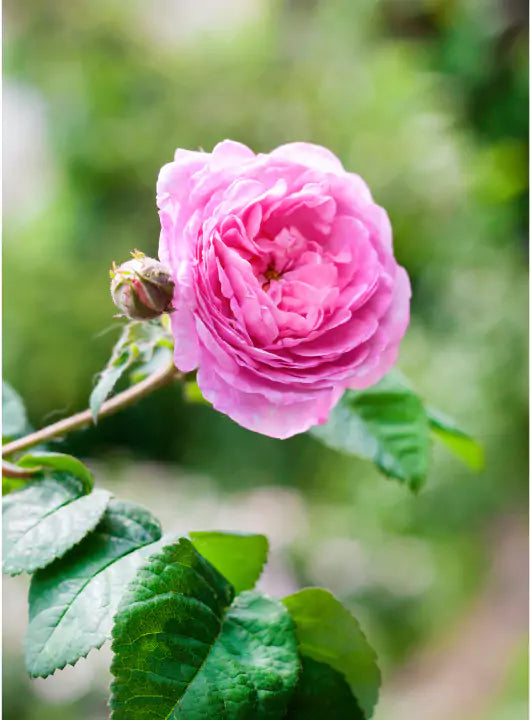
Honeyed, velvety and petal-soft at heart.
No single rose shows all of these at once. The species, where it grew, the year's weather and the way it was extracted all shift the balance. A rose can read soft and powdery, or tart and green, or dark and jammy, depending on which facets lead and what it is paired with.

02
Which roses are used in perfumery?
Roses come in every shape, size and colour, but very few are grown for perfume. Generations of crossbreeding for colour and form have left many modern hybrids with little scent, so perfumers stay loyal to a handful of old, heavily scented roses. Two matter most.

Set side by side, the two flowers look alike to most eyes. In the lab, the difference comes as much from the extract as from the species.
03
Rose otto vs rose absolute: what is the difference?
Rose harvests run from May to June. The flowers are picked by hand in the early morning, when their scent is strongest, and processed the same day.

Roses are picked by hand in the early morning.
Steam distilled
Rose otto is the essential oil, made by steam distillation. It is fresh, bright and slightly metallic. Rich in natural waxes, it turns cloudy and even sets solid in a cool room. Rose water is the by-product of the distillation: lighter and far more affordable, it flavours Turkish delight, desserts and teas, and appears in cosmetics and some perfumes.
Solvent extracted
Rose absolute is made by solvent extraction, first into a waxy concrete, then into the absolute. It is deeper, sweeter and more honeyed. Phenylethyl alcohol, the softest, most petal-like rose molecule, dissolves in water, so much of it is lost to the rose water during distillation but stays in the absolute. For more on both methods, see how perfume ingredients are extracted from plants.
Rose is grown and celebrated across the world. In Morocco it even has its own festival, held each May in El Kelaa M'Gouna, in the Valley of Roses. Rose otto and rose absolute are among the most expensive materials on a perfumer's organ, which is why the real thing is mostly found in luxury perfumes.

Rose otto, rose absolute and rose water.
04
The molecules behind the smell of rose
Every natural extract is a mix of hundreds of molecules, and rose is one of the most complex. A few of them carry most of its character:
Phenylethyl alcohol gives the soft, honeyed, petal heart, and dominates rose absolute. Citronellol and geraniol are the fresh, sweet, slightly lemony backbone of rose otto, with nerol alongside. Eugenol adds the touch of clove.
Then come the trace molecules, present in tiny amounts but with enormous impact. Damascones and damascenone give rose its plummy, winey, jammy fruit. Rose oxide, on its own, smells like a metallic, green rose, and it is also one of the molecules behind the scent of lychee. Tea roses, the China-bred garden roses, owe their fresh tea-leaf smell to yet another molecule, 3,5-dimethoxytoluene.
Several of these molecules also occur in other plants. Citronellol, geraniol and rose oxide are why geranium leaves smell so rosy; I compare the two in rose vs geranium.
From the perfumer's lab
I never judge a rose on a blotter alone. I wear it on skin and come back to it over several hours, because that is where a rose shows its true character: the lemony sparkle fades first, and the honeyed, spicy heart takes its place. It is also how I decide between an otto and an absolute for a formula.


05
Can you make a rose without roses?
Yes, and perfumers do it all the time. Because rose's key molecules can be made in the lab, a perfumer can rebuild a rose accord from scratch, then reproduce the same rose again and again, free from the ups and downs of harvests and origins. It costs a fraction of the natural extract, and it opens the door to roses no flower produces: greener, fruitier, darker or more transparent. Most of the time the best roses combine the two, a reconstructed accord given depth and life with a touch of natural otto or absolute. It is one of the joys of working with natural and synthetic ingredients together.
06
How perfumers use rose
Rose has lasted in perfumery because it blends with almost everything: other florals, woods, citrus, spices, resins and musks. It usually sits in the heart of a fragrance, where it rounds and enriches a composition. With citrus and green notes it turns fresh and tart; with spice, resins and woods it becomes dark and opulent.
Our Rose Rhubarb Essential, from our Mellow family, shows the bright, tangy side. Moroccan rose absolute is generously overdosed at the heart, rich and jammy, while rhubarb and blackcurrant leaf cut through its sweetness and peony adds a dewy transparency. It is a rose for people who thought roses were not for them.

Blend it with Amber Iris for a darker, resinous rose, or with Bergamot Incense for a brighter, citrus-lit one. Our guide on how to blend a fragrance explains how to find the right balance.
Rose at a glance
| Facet | What you smell | Comes from |
|---|---|---|
| Honeyed | Soft petals, honey | Phenylethyl alcohol |
| Fresh, lemony | Clean, citrusy sparkle | Citronellol, geraniol, nerol |
| Fruity | Plum, red wine, jam | Damascones, damascenone |
| Green, metallic | Leaves, stems, lychee | Rose oxide |
| Spicy | Clove | Eugenol |
| Tea | Fresh tea leaves | 3,5-dimethoxytoluene, in tea roses |
Further reading
Frequently asked questions about rose in perfume
What does rose smell like in perfume?+
Honeyed and velvety at heart, with a fresh, lemony opening, fruity notes of plum, red wine and lychee, a touch of clove and a green edge.
What is the difference between rose otto and rose absolute?+
Rose otto is steam distilled: fresh, bright and slightly metallic. Rose absolute is solvent extracted: deeper, sweeter and more honeyed, because it keeps more phenylethyl alcohol.
Which rose is used in perfume?+
Mainly Rosa damascena, the damask rose of Bulgaria and Turkey, and Rosa centifolia, the rose de mai of Grasse and Morocco.
Why is rose oil so expensive?+
The flowers are picked by hand at dawn during a short season and processed the same day, and a huge harvest of petals gives very little oil or absolute.
Is rose a feminine scent?+
No. Rose has been marketed as feminine for centuries, but many roses are fresh, citrusy, woody or spicy. A scent has no gender.
Where can I smell rose at EPC?+
In our Rose Rhubarb Essential, built around Moroccan rose absolute, worn alone or blended with other Essentials.
Emmanuelle Moeglin is the founder and perfumer of Experimental Perfume Club. Classically trained at ISIPCA, with 20 years in the fragrance industry, she is a member of the French Society of Perfumers and teaches perfumery from our central London lab.

Keep exploring
More from the Journal


